UVSS
Designed the end-to-end software experience for an AI-powered under-vehicle scanning system, built so simply that operators with zero computer skills could run it confidently.
- Role
- Product Designer
- Scope
- Design system, UX flows & user journey
- Platform
- Web (Security / Enterprise Software)
- Status
- Shipped · Confidential (NDA)
01 · Context
A powerful AI security system, built for operators who had never used software before.
UVSS uses an underground camera to scan a vehicle's underbelly, with AI flagging weapons and other anomalies in real time. My work was on the software side: the design system, the full user flow, and the end-to-end user journey. The brief had two goals, make it so easy that someone with no computer skills or technical background could operate it confidently, and shape it into a complete, sellable software-as-a-service product rather than just a tool bolted onto the hardware. This is a former employer's project, so only a limited, shareable set of screens is shown here.
Where it started
- A powerful detection system with no dedicated design system or consistent UI language.
- No mapped end-to-end user journey for how operators would actually work day to day.
- Accessibility hadn't been designed in, despite operators varying widely in technical comfort.
- The product experience wasn't yet packaged as a complete, standalone SaaS offering.
Where it landed
- A complete design system used consistently across the whole software.
- Clean, WCAG-aligned user flows built and validated through user testing.
- An interface simple enough for operators with no computer literacy to use unsupported.
- A packaged, complete SaaS/product experience rather than a bare hardware interface.
02 · The problem
Designing for zero computer literacy
Many operators had little to no prior experience with software. Every flow had to be reduced to its simplest possible form, with clear, unambiguous states and minimal room for error.
Turning a hardware system into a software product
UVSS started as a detection system built around the hardware. Part of the job was designing the software layer so it felt like a complete, coherent product — not an afterthought UI wrapped around a camera.
Accessibility in a security-critical interface
Following WCAG guidelines while keeping the interface fast to scan under pressure meant testing repeatedly with real users and simplifying flows until support calls dropped noticeably.
The core idea
Make a highly technical AI security system feel as simple as flipping a switch.
03 · The screens
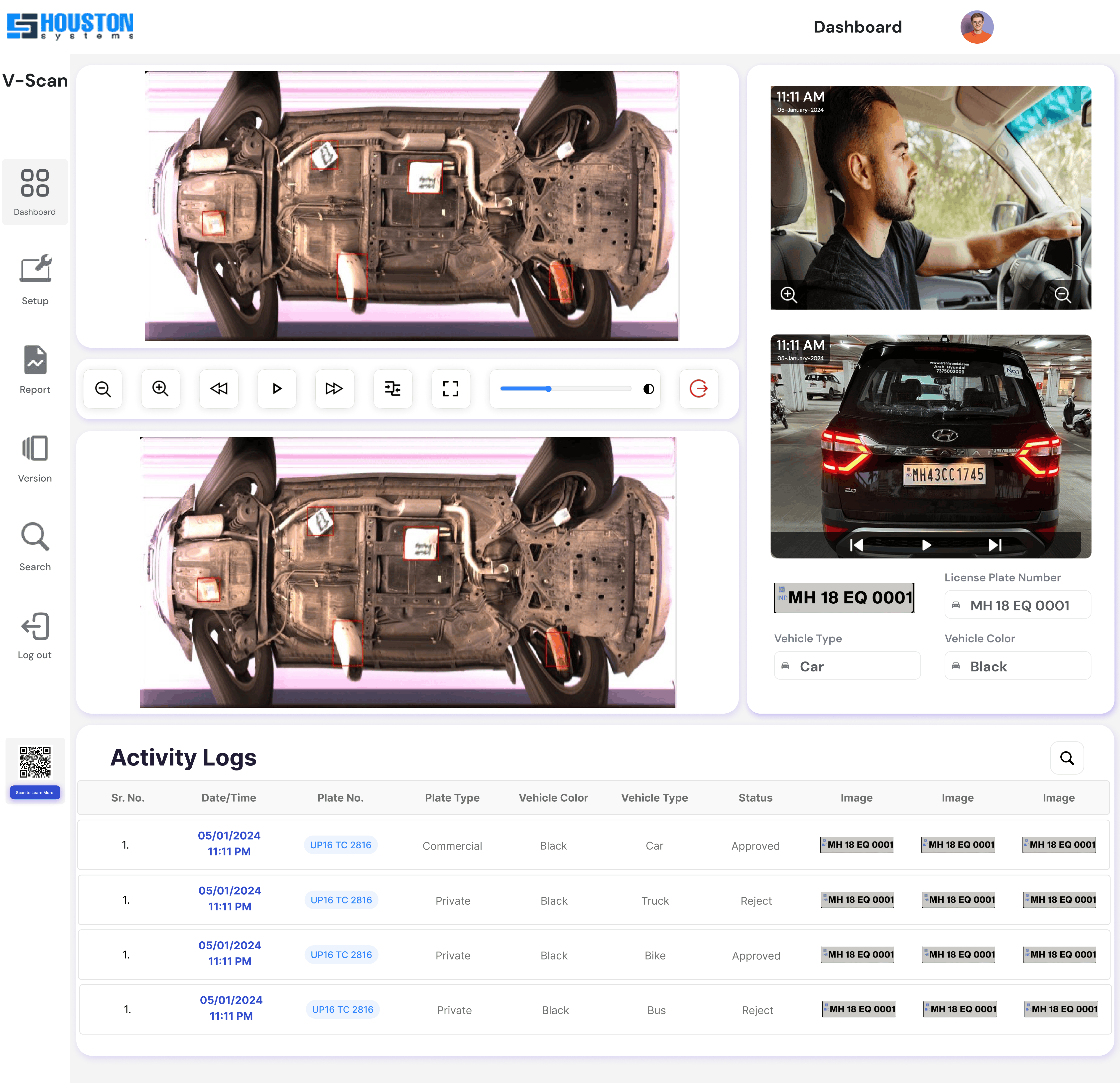 Screen 01
04 · Impact
1
Design system
Built and rolled out a complete design system spanning the whole software.
WCAG
Accessibility standard
Interface designed and tested against WCAG guidelines throughout.
Reduced
Support calls
Simpler flows and clearer UI meaningfully reduced how often operators needed support.
0
Computer skill required
Designed so operators with no technical background could use it confidently, unsupervised.
05 · Learning
Simplicity is a feature when the user has never touched software like this before.
Designing UVSS taught me that 'intuitive' means something different for every audience. Testing with operators who had no software background forced me to strip flows down to their essentials, and it paid off directly — a measurable drop in support calls after launch. It reinforced that accessibility and simplicity aren't just nice-to-haves, they're core product requirements when your users can't be assumed to have any technical baseline.